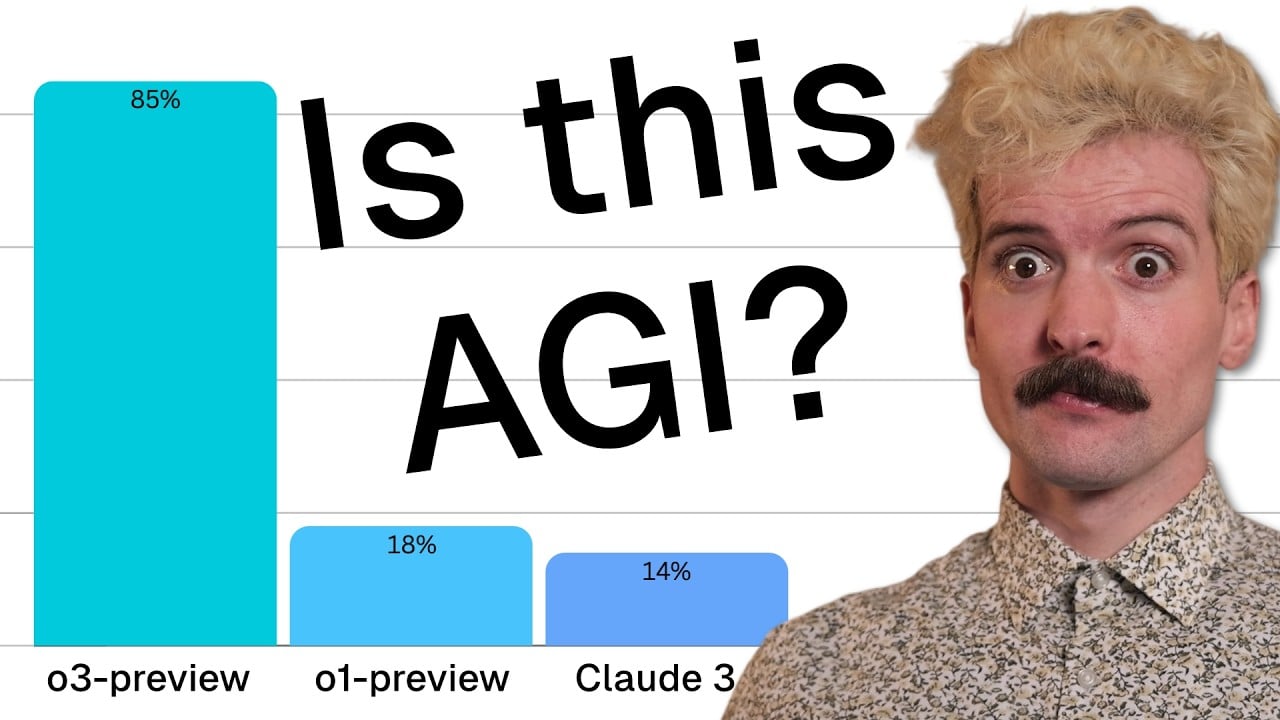
I recently saw a comment from an OpenAI team member stating that the o3 system is indeed classified as a large language model (LLM). This has led me to ponder the implications of this classification in relation to the underlying technology.
Initially, I believed o3 might differ from standard language models. However, it seems that’s not accurate. Could anyone elaborate on this confirmation? What does it mean for o3 to be seen as an LLM instead of another AI type?
I’d love to get insights from others about this announcement and its impact on how we perceive OpenAI’s advancements. Has anyone else noticed similar statements from the OpenAI team regarding the o3 model?
The confirmation makes sense architecturally. I’ve worked with different model types over the years, and the distinction isn’t as clear-cut as people think.
o3 being an LLM doesn’t mean it’s just another ChatGPT. The key difference is likely the training methodology and reasoning capabilities. From what I’ve seen in similar systems, they’re still processing and generating text, but with enhanced reasoning loops built on top.
Practically, o3 probably uses the same transformer architecture we know, but with major improvements in handling complex reasoning tasks. Think upgrading from a basic car engine to a turbocharged one - same concept, vastly different performance.
The real breakthrough isn’t moving away from LLMs, but showing how far we can push the LLM paradigm. This opens up more optimization and scaling possibilities than a completely different architecture would.
This suggests we’re still in the early stages of what’s possible with language models, which is pretty exciting from an engineering standpoint.
I’ve been through enough AI hype cycles to know this confirmation settles a lot of internal debates we’ve been having at work.
Calling o3 an LLM doesn’t diminish what they’ve achieved. It actually proves the transformer architecture has way more headroom than most people realized. We’ve been hitting walls with scaling laws lately, but o3 shows there are other levers to pull.
This changes our approach to model selection for production systems. We’ve been evaluating different architectures for reasoning-heavy tasks, assuming we’d need something completely different. Turns out we should focus on models that do better inference time computation instead.
I’ve worked on systems where we had to chain multiple models together to get decent reasoning. If o3 can handle that complexity internally while staying in the LLM format, it simplifies a lot of engineering challenges.
Nobody’s talking about cost though. Running inference time scaling probably burns more compute per request, but it might still be cheaper than maintaining multiple specialized models. Single model deployments are always easier to manage and scale.
Basically, OpenAI just validated that we don’t need to reinvent the wheel. We just need to get better at using the wheel we already have.
The real game changer isn’t just that o3 is still an LLM - it’s what this means for automation workflows.
I’ve been building systems that integrate different AI models for years. o3 keeping the LLM architecture means we can plug it into existing automation pipelines without major rewrites. This is huge.
Everyone’s talking about technical implications, but think practically. If you’re running automated workflows that process documents, generate reports, or handle customer interactions, you can potentially swap in o3 without rebuilding your entire stack.
Here’s what everyone’s missing: better reasoning in an LLM format makes automation more reliable. Instead of needing complex error handling and validation steps, the model can self-correct and reason through edge cases.
I’ve seen this before - incremental improvements in existing architectures beat completely new approaches. It’s like optimizing a proven engine instead of inventing a new vehicle.
For anyone looking to leverage this AI reasoning in automation workflows, tools that can orchestrate these models properly become critical. Better reasoning plus proper workflow automation is where real productivity gains happen.
This classification clears up so much confusion. I’ve been watching the o3 speculation for months - everyone thought OpenAI would ditch language modeling completely. Turns out they just got really good at inference-time scaling instead of reinventing everything. o3 probably burns way more compute when generating responses, maybe running multiple reasoning loops or double-checking its work behind the scenes. This is actually great news for the industry. We don’t need to throw out transformers and start over - we can build on what already works. Companies can adapt their existing LLM infrastructure instead of rebuilding everything, and all those massive transformer investments weren’t wasted.
Honestly, this isn’t surprising. O3 might have fancy reasoning features, but it’s still just predicting tokens like any other LLM. The “reasoning” is probably just better prompting techniques or chain-of-thought processing built into the training.
What’s interesting here is how it destroys the idea that breakthrough AI needs completely new architectures. I’ve been watching OpenAI’s releases closely, and there were clear hints o3 was still basically a language model - especially how it handles text in and out. Calling it an LLM actually makes o3 more impressive. It shows we haven’t maxed out what transformers can do. Instead of needing revolutionary new approaches, we’re seeing that smart training and inference-time computation can unlock way better performance in existing frameworks. This matters for the whole AI field. If o3 can reason this well while staying an LLM, other companies working on similar architectures aren’t barking up the wrong tree. The real focus should be training methods and inference processing, not just parameter counts or fancy new architectures.